University of British Columbia






Your Custom Text Here
Natural beauty is the first thing that draws Americans to Vancouver—and Canada’s premier western university. A similar scale to places like University of Washington but with two major differences—no big-time sports to unite the campus and limited dorm life. The university is active in recruiting overseas, which creates an international ambience.
What do three prime ministers of Canada, three provincial premiers, an astronaut, a world-renowned opera singer, and two Nobel Prize winners have in common? They are all graduates of the University of British Columbia. Founded in 1908, UBC offers students hundreds of solid programs, such as business, science, engineering, the social sciences, and fine arts, as well as ready access to beaches and mountains and a diploma with instant name recognition. Though the massive campus can sometimes feel isolating, students are nevertheless happy to be here in such illustrious company.
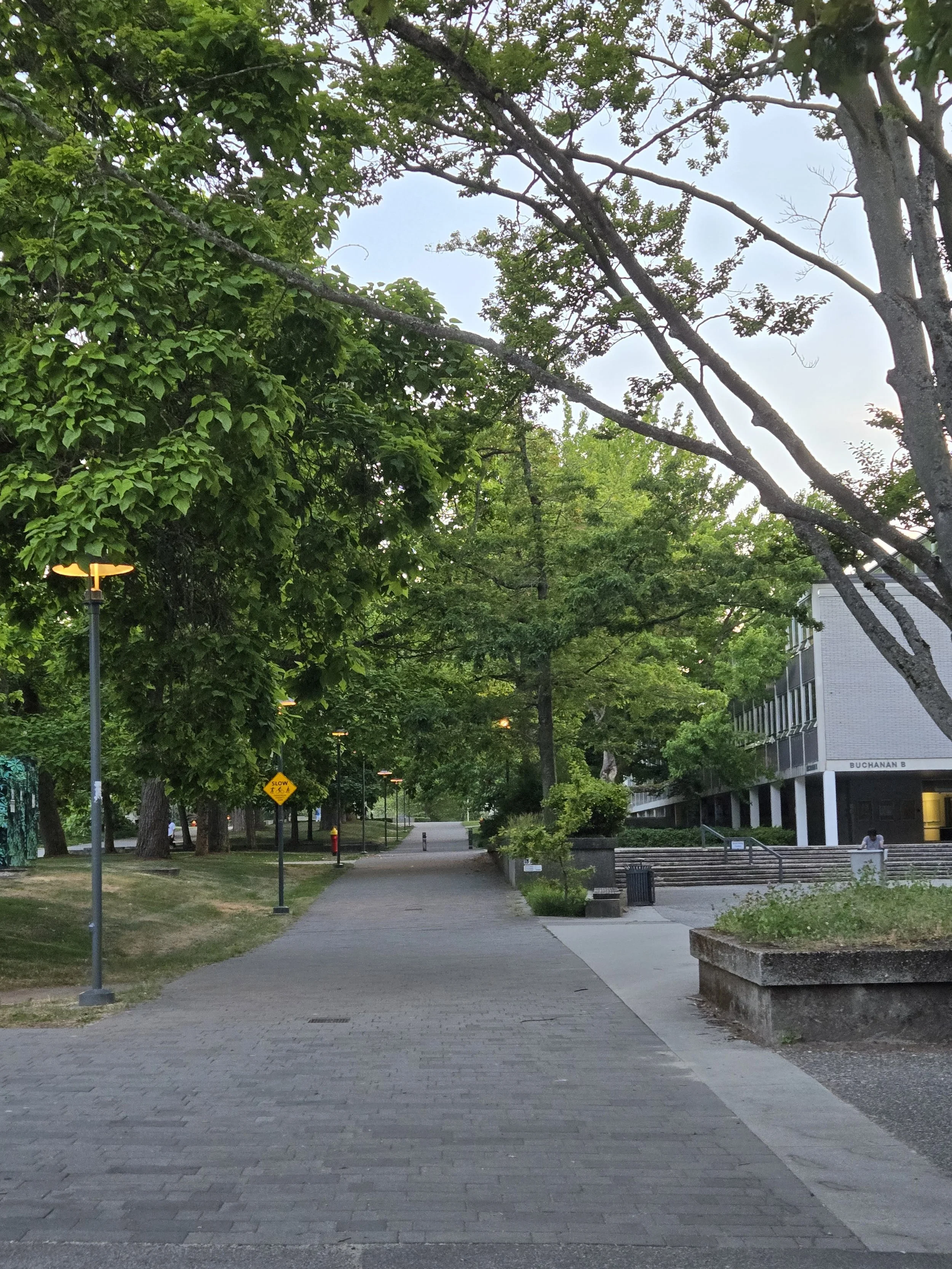
Located just 25 minutes from downtown Vancouver, UBC’s striking Point Grey campus covers a peninsula that borders the Pacific Ocean and is bounded by an old-growth forest. Mountains—perfect for skiing—loom in the distance. Architectural styles are a mix of Gothic and modern, and students can enjoy a leisurely stroll through the university’s botanical gardens. Notable campus facilities include the Kaiser Building (the central hub of engineering), the Barber Learning Centre, the Mitchell Thunderbird Sports Arena, and the Nest (a $106 million student union building). The university also has a smaller campus—UBC Okanagan—located in Kelowna, in the Okanagan Valley.
UBC offers more than 260 undergraduate degree options, and popular majors include psychology, biology, English, and kinesiology. Programs in anthropology, First Nations and indigenous studies, and Asian studies are highly regarded and enhanced by the university’s excellent Museum of Anthropology, which features one of the world’s best collections of Northwest Coast First Nations art. Music majors benefit from the Chan Centre for the Performing Arts. Economics, geography, international relations, microbiology, and commerce are strong too. Additional programs include majors in applied animal biology, applied plant and soil sciences, geographical biogeosciences, and zoology.
Freshmen are offered a wide array of first-year programs, including Imagine UBC and Create UBC Okanagan, a first-day orientation. Arts One and the Coordinated Arts programs offer enriched, integrated approaches to broad interdisciplinary themes in arts and humanities. Qualified students can take advantage of Science One, featuring team-taught courses in biology, chemistry, math, and physics. The UBC study abroad program has more than 200 institutional partners in 40 countries, and co-op programs in engineering, science, arts, commerce, and forestry give students an opportunity to earn while they learn. In addition, honors and double-honors programs are available to superbrains and budding geniuses.
The academic climate is exactly what you would expect from a university of UBC’s international stature. “Courses can be hard,” says one student, “but success is based on your interest and willingness to learn.” One student grumbles about his 8 a.m. philosophy lecture: “Who can focus on the big questions at that time of the morning?” Most classes have fewer than 50 students, while larger lectures are supplemented with smaller labs and discussion groups. Overall, the faculty receives good marks. “The professors are extremely intelligent people who are truly dedicated to their disciplines,” says a junior. Academic advising is a mixed bag, with some students complaining that finding a knowledgeable advisor can be time-consuming.
With more than 40,000 undergraduates attending the Vancouver campus, it’s no surprise that UBC’s student population is a melting pot—30 percent come from outside Canada. “There is a huge diversity here that many smaller schools may lack,” says a sophomore. The typical UBC student is bright, hardworking, and gregarious. Students of color are well represented (Asians make up the largest contingency), and the university encourages diversity through a series of special programs and active recruiting. Hot political issues include LGBTQ, women’s, and human rights. The International Scholars program offers financial support, as well as special service projects, workshops, and other opportunities to top international students.
Roughly one-third of the students currently live on campus. A major expansion of on-campus housing, estimated at US $650 million, has taken place, and UBC guarantees a spot to all incoming first-time, first-year students. On-campus options include co-ed complexes (primarily for freshmen), theme houses, university apartments, and family units for upperclassmen. A history major says on-campus living is worth it to “enjoy the community spirit.” Those seeking off-campus accommodations must contend with Vancouver’s pricey rental market. Hungry students will find an endless variety of meal options at the school’s 45 dining locations, including “Japanese, Lebanese, Italian, and vegetarian” plates, according to one student. The Sexual Assault Support Centre provides support services and educational programming related to sexual violence.
On such a large campus, isolation is a real threat. “You need to get in touch with other students quickly when you get here or you could feel lost on such a big campus,” says a freshman. Social life happens mostly on campus but largely “depends on the crowd you hang with,” according to one student. For partying types, there are the requisite bashes, courtesy of UBC’s small but active Greek scene—one of the few places where underage drinkers may sneak a sip of booze. Alternatives include university-sponsored events, such as movies and guest speakers. Popular campus events include Storm the Wall, long-boat racing, and the Arts County Fair.
Vancouver, with its population of 680,000, offers students countless opportunities, though one health science major says, “It isn’t a college town. It is a well-developed semicosmopolitan city.” Another adds, “Vancouver is one of the most livable cities in the world and UBC is located in the nicest, most beautiful part—it’s not too hard to imagine what a pleasure it is to go to school here.” Gorgeous weather draws students outdoors and to nearby beaches and mountains for in-line skating, snowboarding, and swimming. Eleven recreational sports leagues and multiple intramural events are a huge draw for students at the Vancouver campus; popular sports include sailing, skiing, and cycling. UBC has 36 varsity teams (the Thunderbirds), which have brought home more than 122 national championships—the most of any institution in Canada. Men’s and women’s volleyball and swimming, along with women’s ice hockey and field hockey, have been particularly competitive in recent years.
Spending four years at this mammoth university can be intimidating for the shy student. But for those willing to take control of their social lives, UBC offers an impressive academic milieu. A history major offers this point of view: “I think that the school’s biggest strength is its size; there are so many opportunities here.”
Quisque iaculis facilisis lacinia. Mauris euismod pellentesque tellus sit amet mollis.